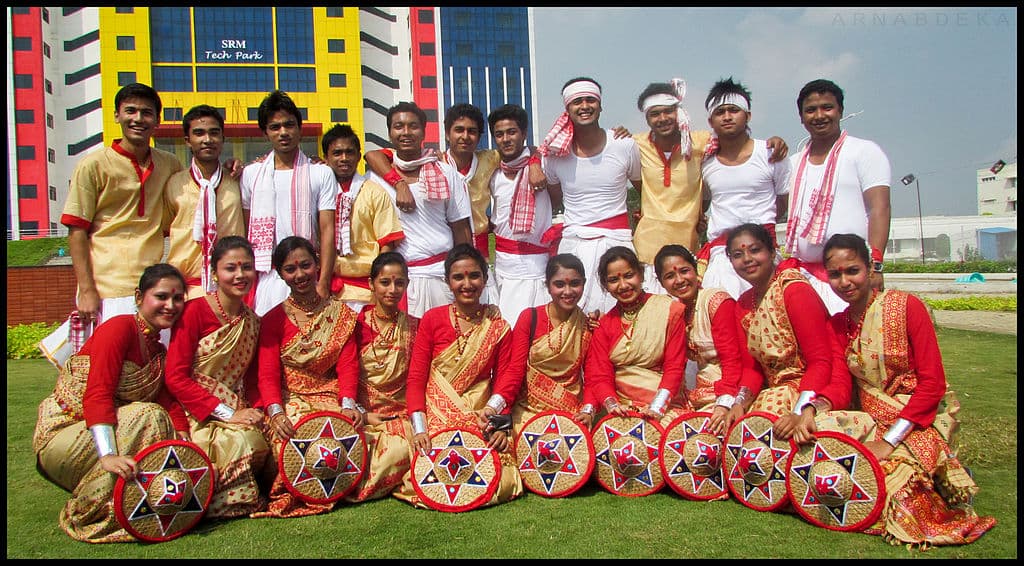
Bhiu folk dance is the chief festival in the Assam state of India. It refers to a set of three different festivals: Rongali or Bohag Bihu observed in April, Kongali or Kati Bihu observed in October, and Bhogali or Magh Bihu observed in January. The Rongali Bihu is the most important of the three celebrating the Assamese new year and the spring festival. The Bhogali Bihu or the Magh Bihu is the one that is all about food. The Kongali Bihu or the Kati Bihu is the sombre, thrifty one reflecting a season of short supplies and is an animistic festival.
Bihu, Assam
Official name
Bihu
Also called
Rongali Bihu (April) • Kaati Bihu (October) • Bhogali Bihu (January)
Observed by
Assamese people
Type
Regional folk
Ends
Varies
Date
In the months of Bohag, Kaati and Maagh
Frequency
Tri-annual
The Rongali Bihu coincides with Poi-Sangken festival in Thailand and other regions of East and South-East Asia. The other two Bihu festivals every year are unique to Assamese people. Like some other Indian festivals, Bihu is associated with agriculture, and rice in particular. Bohag Bihu is a sowing festival, Kati Bihu is associated with crop protection and worship of plants and crops and is an animistic form of festival, while Bhogali Bihu is a harvest festival. Assamese celebrate the Rangali Bihu with feasts, music and dancing. Some hang brass, copper or silver pots on poles in front of their house, while children wear flower garlands then greet the new year as they pass through the rural streets.
The three Bhiu folk dance are Hindu festivals with reverence for Krishna, cattle (Goru Bihu), elders in family, fertility and mother goddess, but the celebrations and rituals reflect influences from aborigine, southeast Asia and Sino-Tibetan cultures. In contemporary times, the Bihus are celebrated by all Assamese people irrespective of religion, caste or creed. It is also celebrated overseas by the Assamese diaspora community living worldwide.
The term Bihu is also used to imply Bhiu folk dance otherwise called Bihu Naas and Bihu folk songs also called Bihu Geet.
In a year there are three Bihu festivals in Assam – in the months of Bohaag (Baisakh, the middle of April), Maagh (the middle of January), and Kaati (Kartik, the middle of October). The Bihus have been celebrated in Assam since ancient times. Each Bihu coincides with a distinctive phase in the farming calendar. The most important and colourful of the three Bihu festival is the Spring festival “Bohag Bihu” or Rongali Bihu celebrated in the middle of April. This is also the beginning of the agricultural season.
Instruments used in Bihu
- Dhol (Drum)
- Taal
- Pepa (An instrument made of buffalo horn)
- Toka
- Baanhi (Flute)
- Xutuli
- Gogona

The India For You letter
A little more India in your inbox, every week.
New stories on heritage, festivals, travel and traditional wisdom, plus the festival calendar before it happens.